Have any questions about your order? We can help! Get in touch with us.
⚡ Only 700 units available — Ships within 48h · Get My Game — $39.90 →
The first biblical board game where fun meets discipleship. Over 900 families already playing.
Unforgettable Experiences of Faith
The Church Life Board Game is the first board game that will truly impact you! Experience genuine fun, deep biblical learning that will stay with you for life, and powerful connection between family and friends.
✅ 100% secure checkout ✅ Made for Christian families, churches & small groups
The Biblical Board Game Made for Christian Families
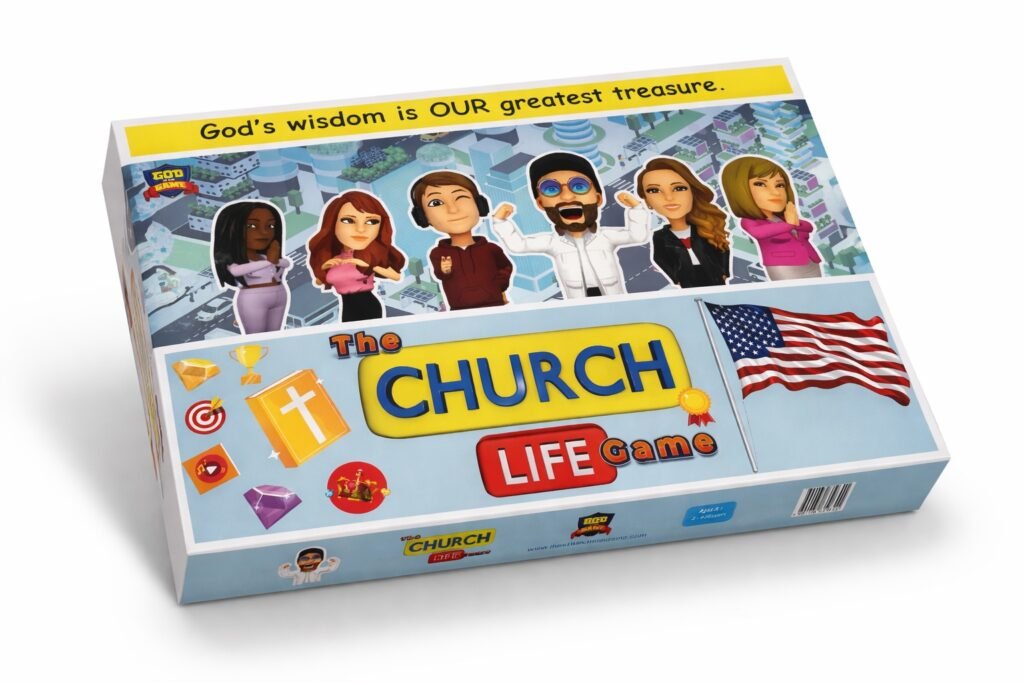
WHAT’S IN THE BOX
A Dream from God to reach your life and your family!
Includes:
🎁 1 Themed Game Board
🃏 120 Cards with Challenges & Bible Verses
🎲 1 Custom Die
🧍 Player Pieces for 2–4 Players
📖 1 Illustrated Instruction Manual
Strengthen your family's faith before the world teaches different values to your children.
Choose Your Pack
The more families you reach, the more you save.
Single Game
1 game · for your family
$39.90
- 1 complete game box
- 2–4 players · ages 8+
- Shipping $7.99 at checkout
MOST POPULAR GIFT
Family Pack
2 games · keep one, give one
$79.80$69.90
You save $9.90
- 2 complete game boxes
- Perfect gift for friends or family
- Shipping $7.99 at checkout
BEST VALUE FOR CHURCHES
Church & School Pack
5 games · churches, schools, small groups
$199.50$159.90
You save $39.60
- 5 complete game boxes
- For cell groups, youth ministries and classrooms
- Shipping $7.99 at checkout
Need 10 or more games for your church or school? Contact us for volume pricing.
Your family deserves more than fun, they deserve Salvation!
Built on biblical principles and supported by Scripture, every challenge, question, and decision encourages players to apply God’s truth in their daily lives.
⭐ The Five Foundations
⭐
📖 God’s Word
Every part of the game is rooted in Scripture, helping players understand and apply biblical truth with confidence.
⭐
🎯 Purpose
Discover God’s calling by learning that every believer is called to share the Gospel, make disciples, and care for those who are growing in their faith.
⭐
❤️Worship and Intimacy with God
Worship is more than singing. It is a lifestyle of honoring God through every decision, attitude, and action.
⭐
🤝 Fellowship
Strengthen family relationships, build healthy friendships, and experience the joy of living in biblical community.
⭐
✝️ Salvation
The greatest victory is not winning the game—it’s understanding God’s plan of salvation and having your name written in the Book of Life.
Make an Eternal Impact
When you purchase The Church Life Game, you are doing more than buying a board game.
You are helping support evangelistic and community outreach projects, equipping families, churches, and future generations to share the Gospel and make a lasting difference.
Play with purpose. Grow in faith. Transform lives.
🔒 100% Secure Payment | ✅ Encrypted Data | 📦 Guaranteed Delivery
Before & After
Years ago, they played The Church Life Game. Today, they are pastors, serving God and caring for people.
We do not say that the game was responsible for their transformation. The work belongs to God.
But we believe that God uses different people, experiences, and tools throughout our journey to teach us, remind us, and help us internalize the principles of His Word.
The Bible says: “I planted, Apollos watered, but God gave the growth.” 1 Corinthians 3:6
The one who plants is part of the story.
The one who waters is part of the story.
The one who harvests is part of the story.
But God is the One who gives the growth.
Maybe, at that time, the game was simply a small part of their journey—a tool that helped them learn, discuss, remember, and live out biblical principles.
Today, when we look at these pictures, we see more than two people playing a game.
We see a small part of a journey that God was already building.
And that is our hope for The Church Life Game: not to replace the Bible, the church, discipleship, or the work of leaders, but to be another tool in God’s hands, helping His Word to be learned, remembered, and internalized.
We plant. Others water. Others harvest.
And God continues to give the growth.
Living the Supernatural over God’s promises!
Jeremiah 29:11
“For I know the plans I have for you,” declares the Lord, “plans to prosper you and not to harm you, plans to give you hope and a future.”
Reflection: This verse assures us that God has a specific and good purpose for each of us, filling our hearts with hope.
Romans 12:2
“Do not conform to the pattern of this world, but be transformed by the renewing of your mind. Then you will be able to test and approve what God’s will is — his good, pleasing and perfect will.”
Reflection: Our responsibility is to seek transformation through God so that we may discern and live out His perfect will.
Ephesians 2:10
“For we are God’s handiwork, created in Christ Jesus to do good works, which God prepared in advance for us to do.”
Reflection: We were created with a clear purpose — to carry out the good works that God has already planned for us, aligning our lives with His greater plan.
Proverbs 16:3
“Commit to the Lord whatever you do, and he will establish your plans.”
Reflection: The key to success in our purposes is surrendering our plans and actions to God, trusting His guidance.
What If There Were a Way to Change All That?
Introducing The Church Life Game — the board game that turns any gathering into a memorable experience of faith, laughter, and genuine connection.
This isn’t just another “boring educational game.” It’s real fun with a deep spiritual purpose.
It’s watching your family put down their phones naturally, hearing authentic laughter mixed with heart-touching reflections that strengthen your faith.
What Families Experience:
📖 More time in God’s Word, together
💬 Deeper conversations around the table
🙌 Youth groups that want to play again
🎁 A gift families love to pass on to other families and churches
HOW IT WORKS
Play, Learn, Reflect, and Strengthen Your Faith
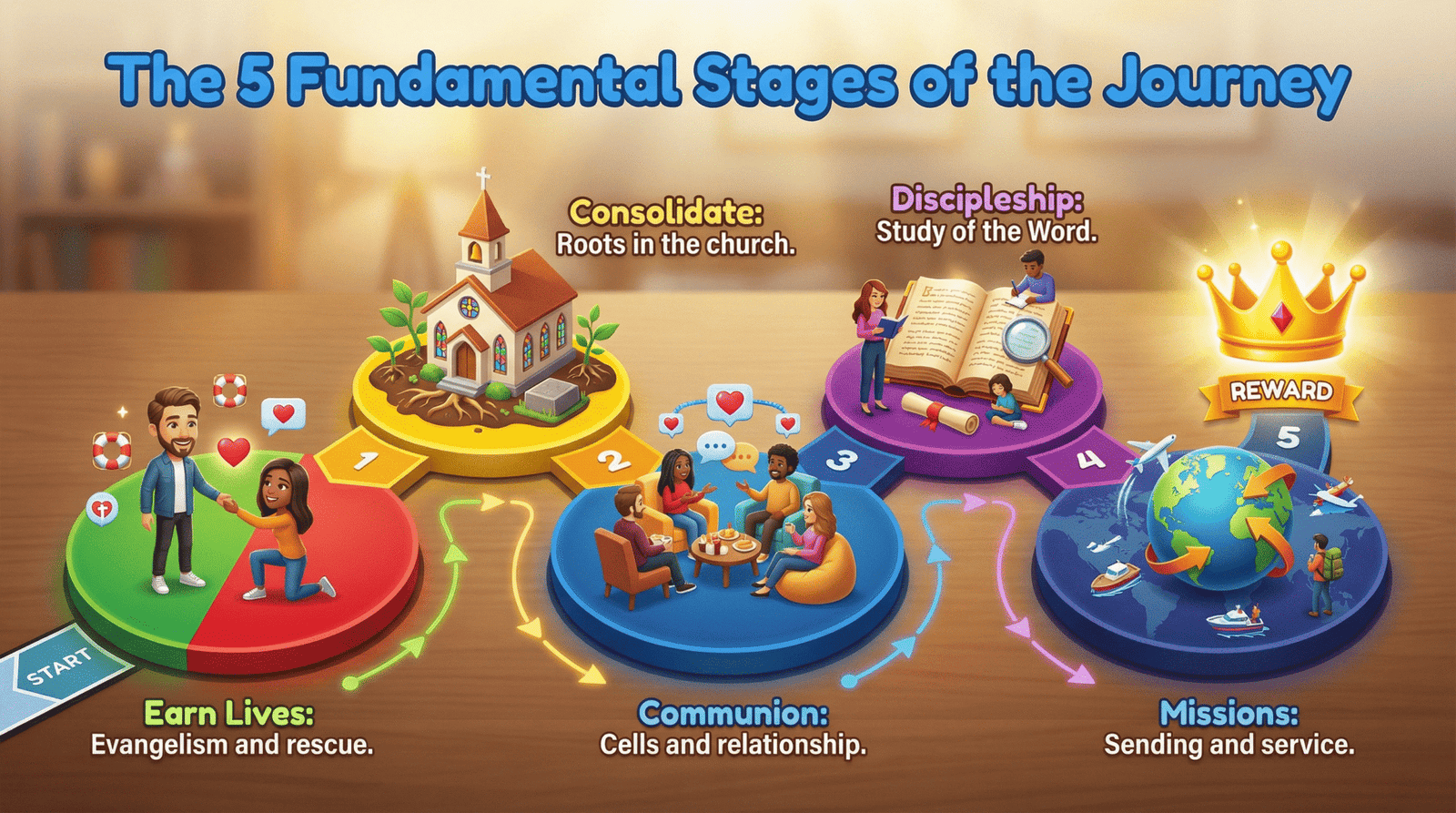
In just 3 simple steps, you and your family will embark on an unforgettable spiritual journey:
Unique Feature: Each game lasts between 30 and 90 minutes — short enough to keep it fun, yet long enough to create deep, lasting moments.
And the best part? Turn this time into worship moments, enjoying your favorite Christian songs while you play.
✨ It’s not about winning or losing. It’s about growing together in faith while having real fun.

Step 1: Begin Your Walk with God
Start your journey toward salvation! The church will guide you along the way. Roll the dice, move forward according to the number, and draw the card that represents where you landed. Then, the next player takes their turn.

Step 2: Stay Away from the Paths of Sin
Avoid the “sin spaces”: they’ll slow you down and make you lose focus on your purpose. Each round, you’ll build works of gold: winning souls, strengthening the church, leading evangelism groups, discipling through the Word, and sending lives into missions. Congratulations! You’ve just earned a Heavenly Reward! There are over 120 unique cards that inspire reflection and meaningful conversations.

Step 3: Complete Your Spiritual Mission 🏆
Win — or rather, fulfill your mission — by having your name written in the Book of Life, not just in the game, but in real life. Your greatest prizes are the memories created, the lessons shared, and the spiritual bonds strengthened with God and your loved ones.
Why Is The Church Life Game
Unlike Anything You’ve Ever Seen?
This isn’t just another Christian game — it’s a powerful tool for transformation, disguised as fun.
✨ Promotes Genuine Fellowship
Creates a safe and joyful space where people of all ages can share experiences, doubts, and spiritual victories without judgment.
You’ll be amazed at what your children open up about during the game.
📖 Teaches the Bible Naturally
Each card encourages deep reflection on Bible verses and stories, adapting to each player’s level of understanding.
Kids and adults learn together in a fun and meaningful way.
👨👩👧👦 Perfect for Any Group
Works beautifully with families, youth groups, Bible study circles, couples’ gatherings, church retreats, gifts for pastors or leaders, and special events.
💡 Encourages Christian Values in Practice
Empathy, wisdom, teamwork, forgiveness, gratitude — each game is a natural opportunity to live out these values through laughter and connection, not obligation.
🏠 Brings the Word Into Every Home
Evangelism happens naturally when people are having fun together.
More than just a game, The Church Life Game is a way to live your faith in community, create eternal memories, and plant spiritual seeds that will grow for generations.


TESTIMONIALS
What Families and Churches Are Saying About The Church Life
Real stories from real people who have experienced the game
Marco, Father
– Florida
"I never imagined a game could bring us so close to God and to each other. My 12-year-old son, who rarely talked about faith, spent two hours playing and sharing deep things from his heart. I’ve already gifted it to three other families from our church!"
Ruandro Fernandes, Pastor
– Florida
"I’ve been using The Church Life in our youth group meetings for two months now. It’s amazing to see young people so engaged laughing, connecting, and having deep conversations about faith."
André Costa, Father
– Florida
"It’s genuinely fun! The mechanics are great, the cards are smart, and we end up having conversations we’d never have otherwise. My wife loved it highly recommend!"
Juliana & Roberto Mendes
– Florida
"I bought it as a gift for our couples’ small group, and it was the most talked-about gift! We all played together, and now it’s a monthly tradition. The best part is that every game feels different and always brings new reflections. Worth every penny!"
FAQ
The game is officially recommended for ages 8 and up, but we’ve heard stories of kids as young as 6 playing (with supervision) and having a great time!
Ideally, at least one player should be able to read. For adult groups, there are deeper cards that make the experience even more meaningful.
From 2 to 4 players.
No! That’s one of the game’s biggest strengths.
The cards are designed to include both new believers and mature Christians.
Bible questions have multiple levels of answers, and many cards focus on personal reflection, not memorization.
Perfect for sharing faith with friends in a light, natural way!
100% physical — it’s a real board game!
You’ll receive the complete box right at your doorstep.
We believe that board games create deeper, more meaningful connections than digital ones — no distractions, just genuine moments face-to-face.
Absolutely! 😊
Many of our customers buy multiple copies to gift to small groups, youth ministries, church leaders, and friends.
You’re One Click Away from Transforming Your Gatherings Forever
Think about it:
How many times have you wished your family had deeper conversations?
How many times have you dreamed of church gatherings that truly touched people’s hearts?
How many opportunities to plant seeds of faith have slipped by — simply because you didn’t have the right tool?
This is the moment.
The Church Life Game won’t solve every problem,
but it will create the perfect environment for transformation to happen —
through laughter, reflection, and genuine connection.
The question isn’t “Is it worth it?”
The real question is:
“How much longer will I wait to create these memories?”

